
5G Use Cases Beyond Phones (2026)
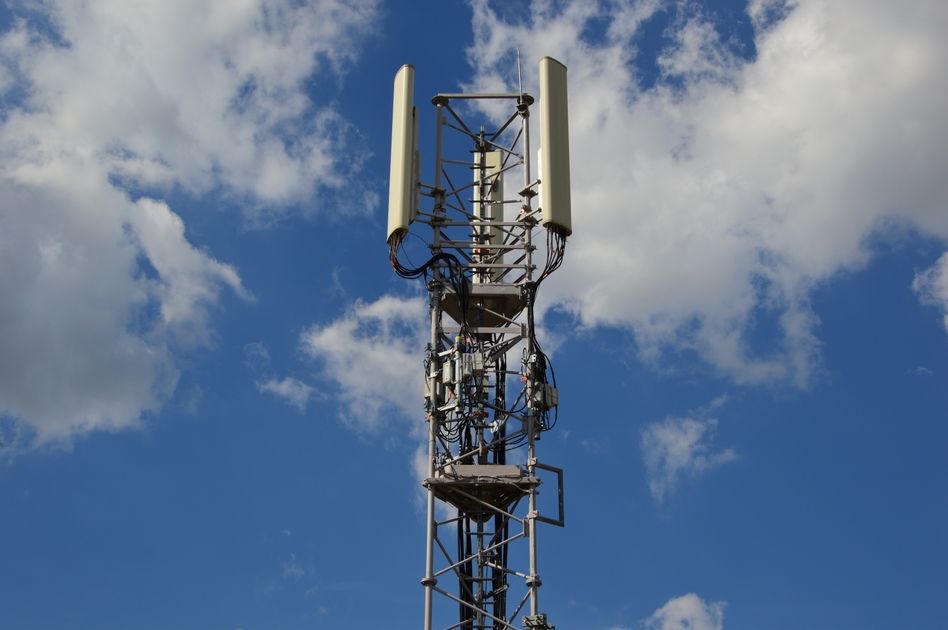
Photo by Ulrick Trappschuh on Pexels
Quick note: Supacells is an independent information site. We don’t sell wireless service or IoT solutions. This article is educational only.
5G’s marketing initially focused on faster smartphones. The real impact comes from applications that weren’t possible on previous networks: home internet replacement, massive IoT deployments, autonomous vehicles, and industrial automation. This guide surveys 5G use cases beyond phones in 2026.
5G’s Three Capability Categories
5G is designed to deliver three types of capability:
| Category | Acronym | What It Enables |
|---|---|---|
| Enhanced Mobile Broadband | eMBB | Faster smartphones, home internet |
| Ultra-Reliable Low-Latency | URLLC | Autonomous vehicles, remote surgery |
| Massive Machine-Type Communications | mMTC | Smart cities, IoT at scale |
Most US 5G is eMBB-focused so far. URLLC and mMTC are growing.
5G Home Internet
The biggest non-phone 5G use case is home broadband:
- T-Mobile Home Internet (5+ million subscribers)
- Verizon 5G Home
- AT&T Internet Air
Why it works: 5G fixed wireless can compete with cable on speed and cost while requiring no installation.
See 5G Home Internet Explained.
Smart Cities
5G supports city-wide IoT deployments:
| Application | What It Does |
|---|---|
| Smart traffic lights | Adaptive timing based on flow |
| Connected parking | Real-time availability |
| Smart streetlights | Dim/brighten based on activity |
| Air quality sensors | Hyperlocal monitoring |
| Trash level sensors | Optimize pickup routes |
| Emergency vehicle priority | Clear paths for ambulances |
| Water leak detection | Save water, reduce damage |
| Public safety cameras | Real-time monitoring |
Some US cities (Las Vegas, Atlanta, Columbus, Charlotte) have substantial 5G smart city deployments.
Autonomous Vehicles
5G’s low latency (sub-10ms) supports vehicle-to-everything (V2X) communication:
| Communication Type | What It Enables |
|---|---|
| Vehicle-to-vehicle (V2V) | Cars communicate to avoid collisions |
| Vehicle-to-infrastructure (V2I) | Cars know traffic signal timing |
| Vehicle-to-pedestrian (V2P) | Cars detect smartphone-carrying pedestrians |
| Vehicle-to-network (V2N) | Cars receive real-time map/traffic data |
Full self-driving still primarily relies on onboard sensors, but 5G enables coordination at scale.
Industrial IoT (IIoT)
Factories deploy private 5G networks for:
- Connected machinery (predictive maintenance)
- Worker safety wearables
- Automated guided vehicles (AGVs)
- Quality control cameras
- Asset tracking
- Real-time analytics
Private 5G networks (owned by company) offer:
- Dedicated bandwidth
- Customized security
- Specific QoS guarantees
- Coverage within facility
Remote Surgery (Emerging)
Remote-controlled surgical robots over 5G enable:
- Surgeons operate from distance
- Access to specialists for rural patients
- Telemedicine for surgical decisions
- Remote training
Current state: experimental and demonstration. Mainstream adoption requires extreme reliability.
Augmented Reality (AR) / Virtual Reality (VR)
5G supports cloud-rendered AR/VR:
- Heavy computing in cloud, light device on user
- Real-time multiplayer VR
- Industrial AR overlays
- AR navigation
- Virtual events
Apple Vision Pro and competing devices may benefit from 5G connectivity for cloud features.
Drone Operations
Commercial drones use 5G for:
- Beyond-visual-line-of-sight (BVLOS) operations
- Real-time video streaming
- Coordinated swarms
- Delivery routing
- Inspection of infrastructure
FAA regulations are evolving to enable broader commercial use.
Connected Healthcare
Beyond remote surgery:
- Connected ambulances streaming patient data
- Hospital IoT (asset tracking, sensor networks)
- Continuous remote patient monitoring
- Field paramedic support via experts in hospital
- Connected medical devices
Live Broadcasting
5G enables high-quality remote production:
- Wireless 4K cameras at events
- Live sports from multiple angles
- Remote production crews
- News gathering without satellite trucks
Major sports leagues experimenting with 5G-enabled production.
Smart Agriculture
Agricultural uses:
- Connected farm equipment
- Soil sensors
- Drone monitoring
- Livestock tracking
- Automated irrigation
- Precision agriculture
USDA and state programs supporting rural 5G partly for agriculture.
Cloud Gaming
5G enables cloud gaming on mobile:
| Service | Status |
|---|---|
| Xbox Cloud Gaming | Active |
| GeForce Now | Active |
| Amazon Luna | Active |
| Apple Arcade Cloud Streaming | Active |
| Google Stadia | Defunct |
Cloud gaming benefits from 5G’s low latency more than its high bandwidth.
Connected Wearables
Beyond smartwatches:
- Independent connected smartwatches (no phone tethered)
- Smart eyewear
- Health monitoring devices
- Industrial worker wearables
- Athletic performance wearables
What Hasn’t Materialized (Yet)
Despite hype, some 5G applications remain limited:
- Hologram calls — interesting demos, not mainstream
- Remote heart surgery — research only
- 8K mobile streaming — bandwidth available but few users want it
- Mass autonomous fleets — still primarily onboard tech
- Smart city ubiquity — uneven deployment
Why Many “5G Use Cases” Are Slow
Reasons:
- Infrastructure investment lag — fast 5G coverage incomplete
- Use case maturity — applications still being developed
- Cost — private 5G networks expensive
- Regulation — autonomous vehicles, drones still developing rules
- Reliability requirements — some uses need near-perfect reliability
What to Watch
| Area | What’s Coming |
|---|---|
| Private 5G | More factories, hospitals, ports |
| V2X | Connected vehicles becoming standard |
| Smart cities | More cities deploying |
| Healthcare IoT | Patient monitoring expanding |
| Edge computing | Combined with 5G for low latency |
| Network slicing | Customized services |
| 6G research | Sub-THz frequencies |
Helpful Resources
📖 FCC 5G Information — official US 5G information.
📖 GSMA 5G — global mobile industry information.
📖 3GPP — 5G technical standards body.
FAQ — 5G Use Cases Beyond Phones
Q: Is 5G actually useful beyond phones? A: Yes — home internet, smart cities, industrial IoT, and emerging healthcare/autonomous use cases. Smartphones remain biggest revenue source but other uses grow.
Q: When will autonomous cars use 5G? A: V2X (vehicle-to-everything) is being deployed gradually. Full autonomy still primarily relies on onboard sensors.
Q: Is private 5G real? A: Yes — factories, hospitals, ports, mines deploy private 5G networks. Growing rapidly in industrial settings.
Q: Will 5G enable hologram calls soon? A: Demonstrations exist but mainstream adoption requires device evolution. Years away.
Q: How does 5G enable smart cities? A: Massive IoT capacity (1M devices/sq km) supports city-wide sensor networks for traffic, air quality, infrastructure monitoring.
Related Reading on Supacells
- 5G Technology Explained
- 5G Home Internet Explained
- 5G Phones in 2026
- Standalone vs Non-Standalone 5G
- The Future of 5G and 6G
Bottom Line
5G’s biggest non-phone impacts in 2026: home internet (T-Mobile, Verizon, AT&T fixed wireless), smart cities (gradual deployment), industrial IoT (private 5G networks), and emerging healthcare/autonomous applications. Most exciting use cases are still developing — but the foundation for major changes in the late 2020s is being laid now.
Disclaimer: This article is for informational and educational purposes only. Supacells does not sell wireless service or IoT solutions.
By Supacells Editorial · Updated May 9, 2026
- 5G use cases
- IoT
- smart cities